The Path Forward for ASEAN Communities
The future of community development in ASEAN will be defined by the ability to balance growth, affordability, and resilience.
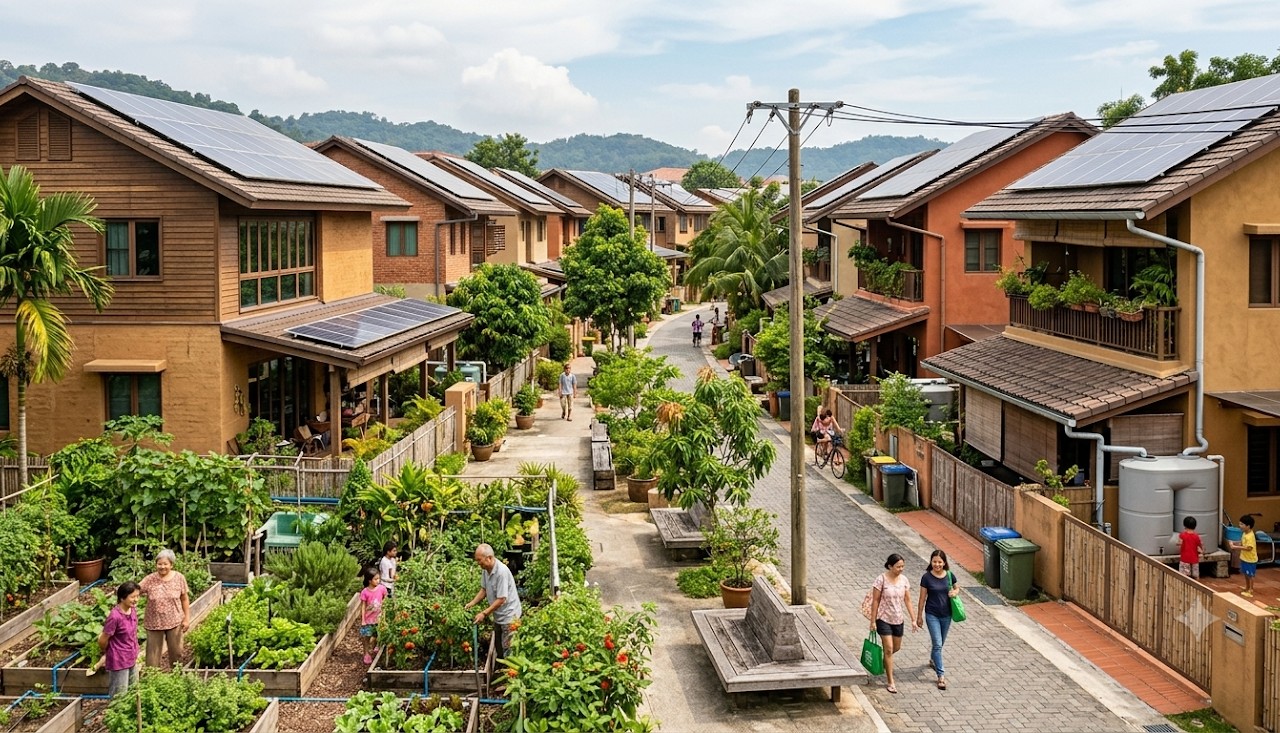
What communities that thrive will prioritize
Communities that thrive over the coming decades are likely to prioritize five strategic pillars:
- Energy resilience through efficiency and distributed generation.
- Water security through conservation and reuse.
- Climate adaptation through resilient infrastructure and materials.
- Circular resource management through improved waste systems.
- Community stewardship supported by digital enablement and responsible governance.
While sustainability remains an important objective, resilience has become an operational necessity. The communities that succeed will not necessarily be those with the most advanced technologies, but those that effectively integrate infrastructure, resources, and people into a resilient and adaptive living environment.
The definition of essential infrastructure is changing
Reliable digital connectivity now supports many of the systems required for modern community operations, including:
- Energy management
- Water monitoring
- Security and surveillance
- Emergency communications
- Remote work and education
- Community administration
- Smart maintenance and asset management
As communities become increasingly connected, digital infrastructure will play an important role in enhancing efficiency, transparency, and resilience. Future developments must therefore consider digital readiness alongside traditional physical infrastructure.
In an increasingly uncertain world, sustainable and resilient communities are no longer a future aspiration. They are a fundamental requirement for responsible living across ASEAN.
Have a sustainability initiative in mind?
Tell us about it — we're shaping this programme with input from the communities and partners it's meant to serve.
Enquire Here
Disclaimer: This article reflects Bullwerkz's analysis and perspectives based on publicly available industry research, regional sustainability trends, and professional experience. It is intended for general informational purposes and does not represent legal, engineering, financial, or investment advice. References to market trends and community challenges are synthesized from multiple publicly available sources and should not be interpreted as endorsements of any specific policy, technology, or solution.